
When your talent is worth millions, your behavior is too: the real cost of a poorly thought-out “live”
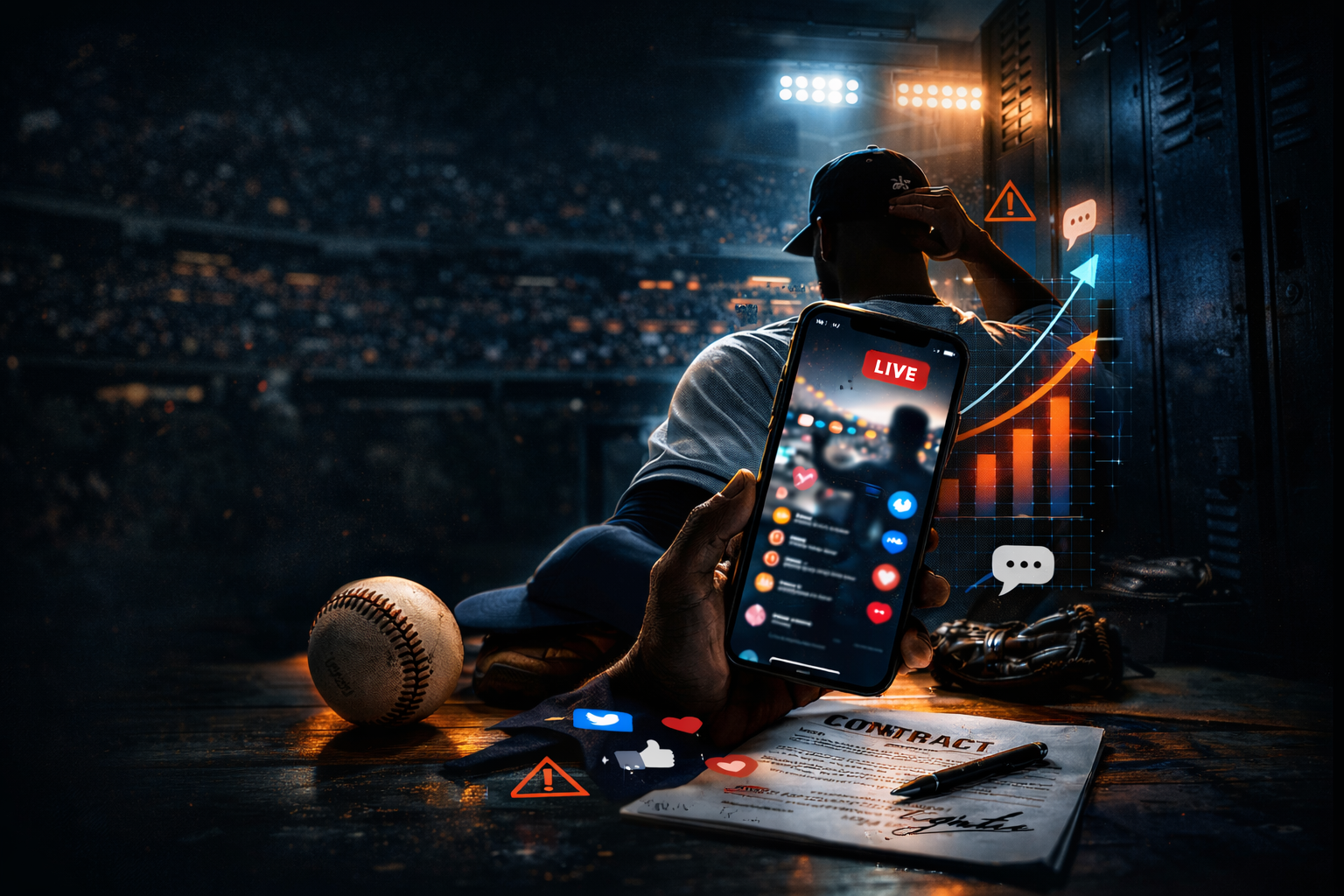
In modern baseball, there’s a truth almost no one wants to say out loud: the uniform comes off, but your personal brand stays on 24/7.
Today, a player can be off the field and still be “in the game” for his organization, sponsors, and public opinion. And the issue isn’t that athletes have lives—they do, and they should. The issue is that many still believe, “If I post it on my socials, it’s no big deal.”
It is. And it almost always costs.
The athlete doesn’t just play: he represents
Organizations invest in a player like a strategic asset: development, health, projection, marketing—and often the team narrative itself. That’s why, when a franchise limits certain participation (LIDOM, the Classic, exhibitions, or high-risk activities), it isn’t always “bad will.” It’s risk management.
But here’s the contradiction exploding in the digital era: the body is protected in the contract, while the image is neglected in the feed.
And image isn’t a detail. Image is business.
The silent impact: what people don’t see
An “innocent” video can trigger alarms on three levels:
Internal (organization):
“Does this player understand what he represents? Can he be guided? Is he disciplined?”
Commercial (sponsors):
“Do we want our brand near this behavior? Are there reputational risks?”
Public (fans/media):
A narrative forms that’s almost impossible to undo: “irresponsible,” “immature,” “doesn’t learn,” “disrespectful.”
And in the age of the clip, the explanation arrives late. The label is already set.
Media education is no longer optional
This is where many organizations still fail: it’s not enough to forbid—you have to teach.
The athlete needs real support:
- Media and crisis training
- Social media protocols (what yes/what no/when/how)
- Personal brand advisory
- A clear “why” behind every rule
Because if not, the rule becomes punishment… and the player sees it as control, not protection.
What’s at stake: career and legacy
The irony is that the athlete thinks he’s protecting his freedom, but he’s actually risking the only thing that gives him power: his career.
A contract can be signed because of talent.
But trust… is lost because of behavior.
And rebuilding trust costs more than recovering from a few bad innings.
Closing: respect is trained too
Baseball is an emotional business, yes. But it’s also an industry built on reputation, consistency, and credibility.
The player who understands that early doesn’t just last longer—he earns better, negotiates better, and builds legacy.
Because in the end, talent opens the door…
but maturity is what keeps you inside.